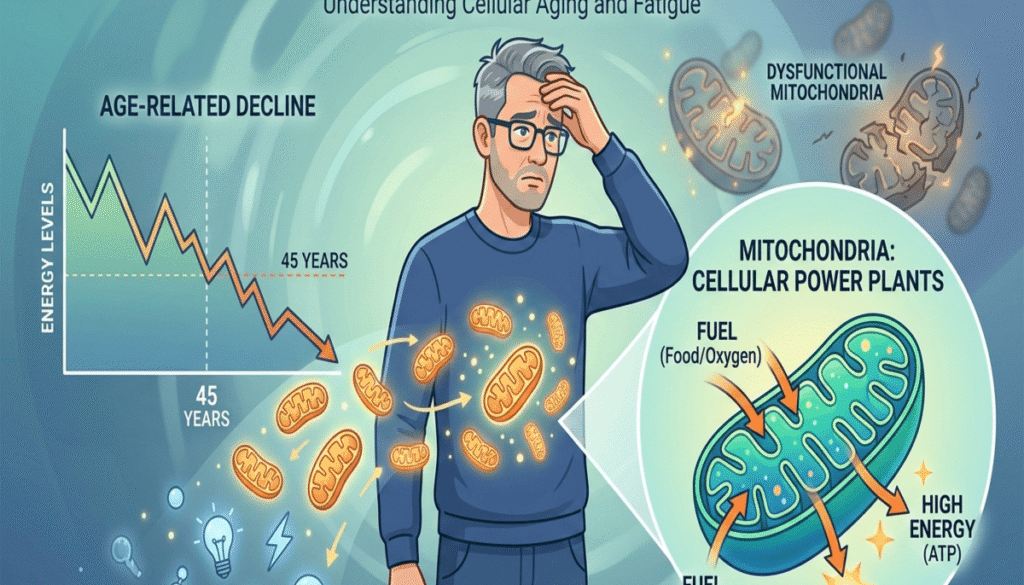
Why Energy Drops After 45: The Mitochondrial Connection

Introduction: When Energy Drops Start Feeling “Normal”
You sleep seven hours.
You eat reasonably well.
Yet by 3 PM, your energy drops like a stone.
Sound familiar?
Many people assume fatigue after 45 is simply “getting older.” However, that explanation is incomplete. In reality, when energy drops become persistent, there’s often a biological reason beneath the surface.
And that reason frequently leads back to something most people never think about: mitochondria.
These tiny structures inside your cells determine how much usable energy your body produces. When they slow down, you feel it — physically, mentally, emotionally.
So let’s unpack what’s really happening—and what you can do about it. Learn More…
Why Energy Drops Increase After 45
Energy drops after midlife aren’t random. Instead, they tend to follow predictable physiological shifts.
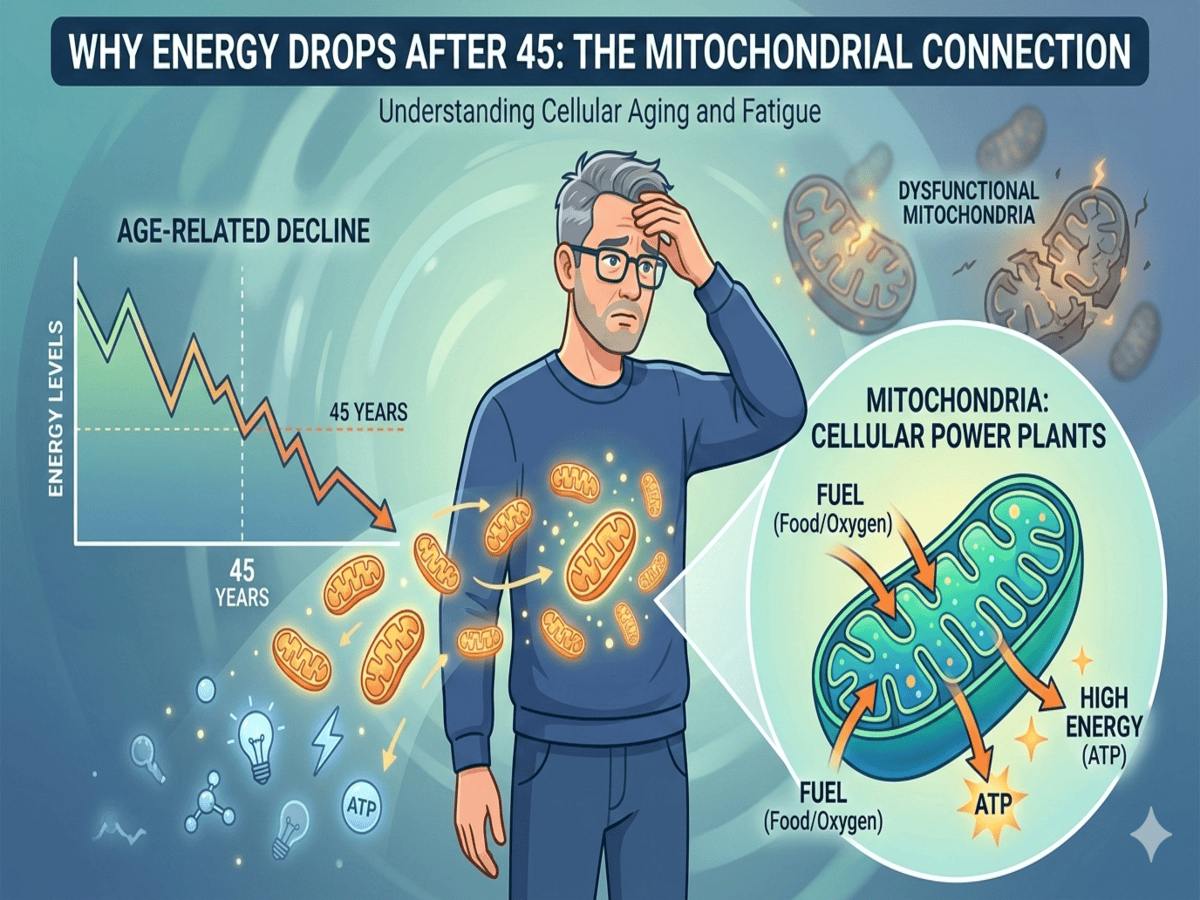
According to the National Institute on Aging, mitochondrial efficiency declines with age. That means your cells produce less ATP (adenosine triphosphate), the molecule that fuels everything from muscle contractions to brain focus.
At the same time:
-
Hormone levels shift
-
Muscle mass gradually decreases
-
Oxidative stress accumulates
-
Nutrient absorption becomes less efficient
Individually, these changes are manageable. Combined? They create the perfect storm for energy drops.
The Mitochondrial Connection Behind Energy Drops
Think of mitochondria as microscopic power plants.
When you’re younger, they operate at high capacity. However, over time, their output declines.
Research indexed in PubMed consistently links aging to reduced mitochondrial function and increased oxidative damage. In simple terms, your cells lose efficiency at converting nutrients into energy.
Here’s what that means practically:
-
You may feel tired even after sleeping
-
Recovery from workouts slows
-
Mental sharpness declines
-
Afternoon crashes become routine
This isn’t laziness. It’s cellular biology.
Energy Drops vs. “Just Aging”: A Critical Comparison
Many people blur the line between natural aging and metabolic slowdown. However, they’re not identical.
📊 Comparison Table: Aging vs. Mitochondrial Decline
| Factor | Normal Aging | Mitochondrial-Driven Energy Drops |
|---|---|---|
| Fatigue | Mild, occasional | Persistent, daily |
| Recovery | Slightly slower | Noticeably prolonged |
| Brain Fog | Rare | Frequent |
| Exercise Tolerance | Gradual decline | Sharp stamina drop |
| Sleep Impact | Helps restore | Often doesn’t fully restore |
Notice the pattern?
When energy drops stem from mitochondrial inefficiency, rest alone doesn’t fix the problem.
👉 Best Overall Choice: Advanced Mitochondrial Formula
Ideal for sustained, cellular-level support.
The Science Behind Why Energy Drops Happen
Energy production relies on ATP. ATP production relies on healthy mitochondria.
As we age:
-
CoQ10 levels decline – CoQ10 is essential for electron transport chain function.
-
NAD+ levels decrease—critical for cellular repair and energy metabolism.
-
Oxidative stress increases—damages mitochondrial membranes.
The Cleveland Clinic explains that mitochondrial dysfunction contributes to fatigue and reduced endurance, especially in midlife and beyond.
Additionally, researchers from the Harvard T.H. Chan School of Public Health note that micronutrient deficiencies (especially B vitamins and magnesium) further impair metabolic energy pathways.
So when energy drops feel relentless, it’s often because multiple systems are under strain—not just one.
👉 See the advanced mitochondrial support formula here →
Key Triggers That Accelerate Energy Drops After 45
While aging plays a role, lifestyle factors amplify mitochondrial decline.
1. Chronic Stress
Cortisol overexposure damages mitochondrial integrity over time.
2. Sedentary Living
Ironically, movement stimulates mitochondrial growth. Inactivity shrinks capacity.
3. Poor Sleep Quality
Deep sleep repairs cellular damage. Without it, energy drops compound.
4. Ultra-Processed Diets
Low nutrient density equals reduced ATP production efficiency.
Energy doesn’t vanish overnight. It erodes gradually.
How Mitochondrial Health Influences Mental Energy Drops
Here’s something many overlook: your brain consumes about 20% of your body’s energy.
When mitochondria underperform, cognitive clarity suffers first.
That’s why energy drops often appear as the following:
-
Brain fog
-
Reduced concentration
-
Low motivation
-
Mood fluctuations
In fact, mitochondrial dysfunction has been increasingly studied in relation to neurodegenerative processes. While that sounds dramatic, the takeaway is simple:
Healthy mitochondria support mental sharpness.
Can Energy Drops Be Reversed?
This is the hopeful part.
Yes — to a significant degree.
Mitochondria are adaptable. With the right inputs, they can regenerate and increase efficiency. This process is called mitochondrial biogenesis.
Strength training, for example, stimulates the production of new mitochondria. So does interval training.
Nutritionally, certain compounds support ATP pathways:
-
CoQ10
-
PQQ
-
Acetyl-L-Carnitine
-
Magnesium
-
NAD+ precursors
However, supplements alone aren’t magic. They amplify foundational habits.
Practical Strategies to Counter Energy Drops
Let’s make this actionable.
1. Strength Train 2–3 Times Weekly
Resistance training signals your body to build new mitochondria.
2. Prioritize Sleep Depth
Seven hours isn’t enough if quality is poor. Aim for consistent sleep cycles.
3. Increase Protein Intake
Muscle tissue supports metabolic efficiency.
4. Reduce Refined Carbohydrates
Blood sugar spikes worsen energy crashes.
5. Consider Targeted Supplementation
Comprehensive mitochondrial support formulas may assist long-term energy resilience.
Why Caffeine Doesn’t Solve Energy Drops
Coffee feels helpful.
But it doesn’t fix the root issue.
Caffeine blocks adenosine receptors, temporarily masking fatigue signals. It doesn’t improve mitochondrial efficiency. Over time, reliance can worsen energy volatility.
If your energy drops and requires escalating caffeine intake, that’s often a signal to look deeper.
A Personal Perspective: The Midlife Energy Wake-Up Call
Many adults describe the same moment.
They hit 46 or 48 and suddenly notice workouts feel harder. Focus feels shorter. Even enthusiasm feels muted.
It’s not dramatic exhaustion. It’s subtle but persistent.
That’s the mitochondrial tipping point.
The encouraging part? Those who address it often report not just restored energy but more stable, predictable vitality.
Consistency replaces crashes.
Key Insights About Why Energy Drops After 45
📌 Energy drops are often cellular, not motivational.
📌 Mitochondrial decline plays a central role.
📌 Sleep and exercise directly influence mitochondrial repair.
📌 Nutrient depletion accelerates fatigue.
📌 Sustainable energy requires rebuilding — not stimulation.
Visual Summary
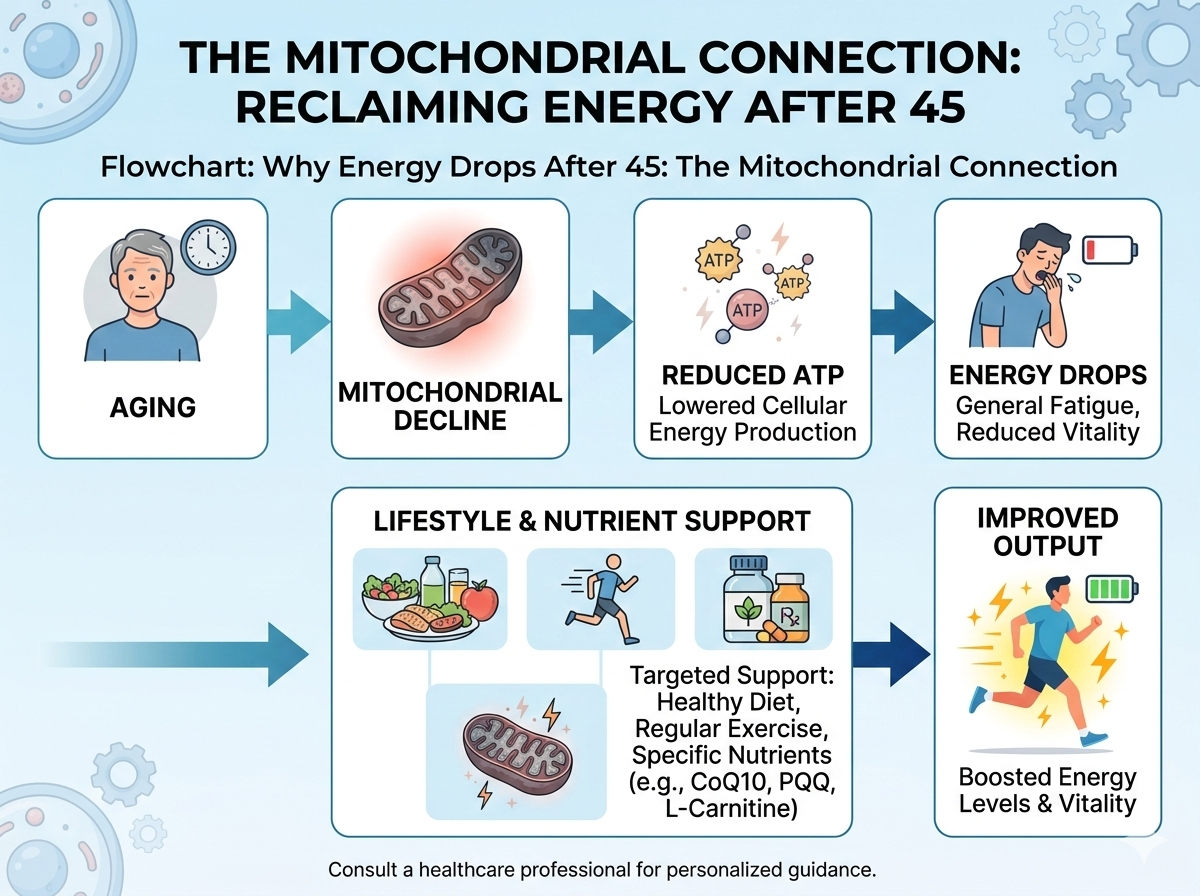
Flowchart: Aging → Mitochondrial Decline → Reduced ATP → Energy Drops → Lifestyle & Nutrient Support → Improved Output
Conclusion: Energy Drops Aren’t Inevitable
Energy drops after 45 aren’t a personal failure.
They’re a biological signal.
When mitochondria slow down, everything feels harder. However, when you support them—through movement, sleep, nutrition, and targeted supplementation—your system recalibrates.
Energy isn’t lost forever.
It’s waiting for better support.
Call to Action
Have you noticed when your energy drops started becoming more frequent?
Share your experience in the comments.
Or explore our in-depth guide on natural mitochondrial support to take the next step toward sustainable vitality.
Your 50s—and beyond—don’t have to feel smaller than your 30s.
They can feel stronger.