The Holistic Approach to Supplementation: A Smarter, Whole-Body Health Strategy
Introduction: Why the Holistic Approach to Supplementation Is No Longer Optional
These days, it seems almost effortless to buy supplements. In fact, with just a few clicks—or a quick visit to the nearest pharmacy—you can walk away with bottles promising instant energy, stronger immunity, or reverse aging.
However, despite all this access, many people still feel stuck—tired, inflamed, unfocused, or simply not well.
So, what’s missing?
More often than not, the problem isn’t what people are taking—it’s how they’re approaching supplementation altogether. That’s exactly where the holistic approach to supplementation comes in.
Rather than isolating nutrients or chasing the latest health trend, this approach focuses on the entire system. In other words, it recognizes that the body functions as a connected whole—not a collection of separate parts.
As a result, supplementation becomes intentional, personalized, and sustainable instead of reactive and short-lived.
What the Holistic Approach to Supplementation Really Means
Looking Beyond Pills and Powders
At its core, the holistic approach to supplementation is about context. Instead of asking, “Which supplement should I take?”, it encourages a deeper question:
“What does my body need to function optimally—right now?”
More importantly, it considers multiple layers at once, including:
-
Nutritional status and food quality
-
Digestive efficiency and gut health
-
Stress levels and sleep patterns
-
Physical activity and recovery
-
Age-related metabolic changes
Because of this broader lens, supplements are no longer treated as shortcuts. Instead, they become support tools that work alongside lifestyle choices.
Holistic Approach to Supplementation vs Conventional Supplement Use
Why Intent Matters More Than Intake
Although many people take supplements daily, very few stop to consider why they’re taking them. Consequently, results are often inconsistent or disappointing.
To clarify the difference, here’s how the holistic approach to supplementation compares to conventional methods:
Comparison Table
| Aspect | Conventional Supplement Use | Holistic Approach to Supplementation |
|---|---|---|
| Core focus | Symptoms | Root causes |
| Strategy | Single nutrients | Synergy + lifestyle |
| Timing | Habit or hype | Personalized and strategic |
| Absorption | Often ignored | Actively supported |
| Outcomes | Short-term | Long-term and sustainable |
As you can see, the difference isn’t subtle—it’s foundational.
Why Supplements Alone Rarely Deliver Lasting Results
Absorption: The Missing Link
Even when someone chooses high-quality supplements, results can still fall flat. Why? Because absorption is frequently overlooked.
In fact, factors such as chronic stress, poor digestion, inflammation, and nutrient imbalances can dramatically reduce how well supplements are utilized.
For example:
-
Stress depletes magnesium and B vitamins
-
Poor gut health limits mineral absorption
-
Inflammation interferes with cellular uptake
Therefore, the holistic approach to supplementation always considers how well the body can actually use what it receives.
Gut Health: The Cornerstone of Holistic Supplementation
Why Everything Starts in the Gut
Without question, gut health plays a central role in overall wellness. Not only does it affect digestion, but it also influences immunity, mood, inflammation, and nutrient utilization.
Because of this, holistic supplementation prioritizes gut support first.
Typically, this includes:
-
Probiotics to restore microbial balance
-
Prebiotics to nourish beneficial bacteria
-
Digestive enzymes to improve breakdown and absorption
When the gut is supported, supplements stop being hit-or-miss and start working with the body instead of against it.
Synergy Over Isolation: How Nutrients Work Better Together
Why Pairing Matters
One of the most powerful—and most ignored—principles of the holistic approach to supplementation is nutrient synergy.
Rather than working alone, many nutrients rely on one another to function properly.
For instance:
-
Vitamin D works best with magnesium and vitamin K2
-
Iron absorption improves dramatically with vitamin C
-
Omega-3s are more effective alongside antioxidants
-
B vitamins perform better as a full complex
As a result, taking isolated nutrients without considering their partners often leads to suboptimal outcomes.
Lifestyle: The Silent Amplifier of Supplement Effectiveness
Why Habits Can Make or Break Results
Even the best supplement stack cannot override poor lifestyle habits. That’s why the holistic approach to supplementation integrates daily behaviors into the equation.
Specifically, it addresses:
-
Stress management: Chronic stress rapidly depletes key nutrients
-
Sleep quality: Poor sleep disrupts hormonal and metabolic balance
-
Movement: Regular activity improves circulation and nutrient delivery
When these factors align, supplements become exponentially more effective.
A Personal Turning Point: When Less Became More
At one stage, I believed that taking more supplements would accelerate results. Consequently, my routine became complicated—and expensive.
Yet, ironically, I felt worse.
Only after simplifying—supporting my gut, reducing stress, improving sleep, and focusing on fewer, more strategic supplements—did my energy and clarity return.
That experience reinforced a crucial truth:
The holistic approach to supplementation is about precision, not excess.
How Age Changes Supplementation Needs
Adapting the Holistic Approach Over Time
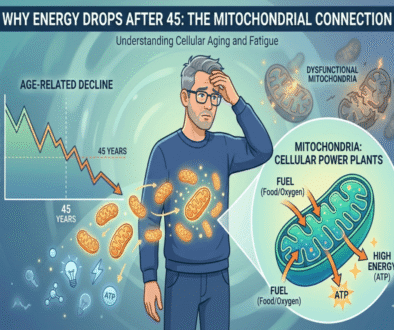
As the body ages, its needs shift. Digestion slows, hormone levels change, and recovery takes longer.
Therefore, a holistic approach to supplementation evolves by emphasizing:
-
Mitochondrial and cellular energy support
-
Anti-inflammatory nutrients
-
Improved mineral and protein absorption
-
Cognitive and joint health
Instead of fighting aging, this approach works with the body’s natural changes.
Choosing Quality Supplements the Holistic Way
What Truly Matters on the Label
Not all supplements deliver equal value. Consequently, holistic supplementation prioritizes quality over quantity.
Look for products that offer:
-
Bioavailable nutrient forms
-
Clinically effective dosages
-
Minimal fillers and additives
-
Transparent testing standards
Ultimately, better supplements reduce guesswork—and improve outcomes.
How to Build a Holistic Supplementation Strategy
A Practical, Step-by-Step Framework
To apply the holistic approach to supplementation effectively:
-
Strengthen foundations: nutrition, sleep, hydration
-
Support digestion and gut health
-
Identify genuine nutrient gaps
-
Combine synergistic nutrients
-
Reassess and adjust regularly
This process transforms supplementation into a long-term health strategy instead of a temporary experiment.
Visual Overview: The Holistic Supplementation Ecosystem
Key Insights to Remember
-
Supplements enhance—they don’t replace—healthy habits
-
Absorption is more important than dosage
-
Gut health is foundational
-
Synergy outperforms isolated nutrients
-
Alignment delivers lasting results
When these elements work together, supplementation finally fulfills its promise.
Conclusion: A Smarter Way Forward
Ultimately, the holistic approach to supplementation invites a complete mindset shift. Instead of reacting to symptoms, it encourages awareness, balance, and intention.
So, rather than asking, “What should I take next?”, consider asking:
“What does my whole body need to thrive right now?”
That single question can change everything.
If this article reshaped how you view supplementation:
-
💬 Share your thoughts or experiences below
-
📩 Subscribe for evidence-based wellness insights
-
📚 Explore related guides on gut health, healthy aging, and nutrient synergy
Your health deserves a holistic strategy—not shortcuts.