Joint Pain Supplements That Work

Introduction: Why Joint Pain Supplements That Work Matter More Than You Think
Stiff knees when you stand up.
A shoulder that clicks every time you reach for something.
Fingers that feel older than the rest of you.
Most people blame age. But age isn’t the full story.
Joint discomfort often comes from gradual cartilage breakdown, low-grade inflammation, nutrient depletion, and years of mechanical stress. The good news? Certain joint pain supplements that work can support cartilage, reduce inflammation, and improve mobility—without jumping straight to heavy medication.
In this guide, you’ll discover:
-
What actually causes joint pain
-
The ingredients backed by real research
-
How to choose a supplement that’s worth your money
-
Lifestyle habits that multiply your results
No hype. No miracle promises. Just clear, science-guided direction.
What Are Joint Pain Supplements That Work? (Plain-Language Explanation)
Joint pain supplements that work are nutritional formulas designed to support cartilage health, reduce inflammation, and improve joint lubrication.
Think of your joints like door hinges. Over time, the lubrication dries out and the hinge starts grinding. Supplements don’t replace the hinge—but they can help maintain the lubrication and protect the surface.
Most effective joint formulas focus on:
-
Supporting cartilage structure
-
Reducing inflammatory markers
-
Improving joint fluid balance
-
Enhancing mobility and flexibility
What is the difference between something that “sounds good” and something that works? Evidence and ingredient quality.
Common Signs Your Joints Need Support
You don’t have to be in severe pain to benefit.
Look out for:
-
Morning stiffness that lasts more than 15 minutes
-
Clicking or grinding sensations
-
Reduced flexibility
-
Swelling after activity
-
Needing a longer recovery after exercise
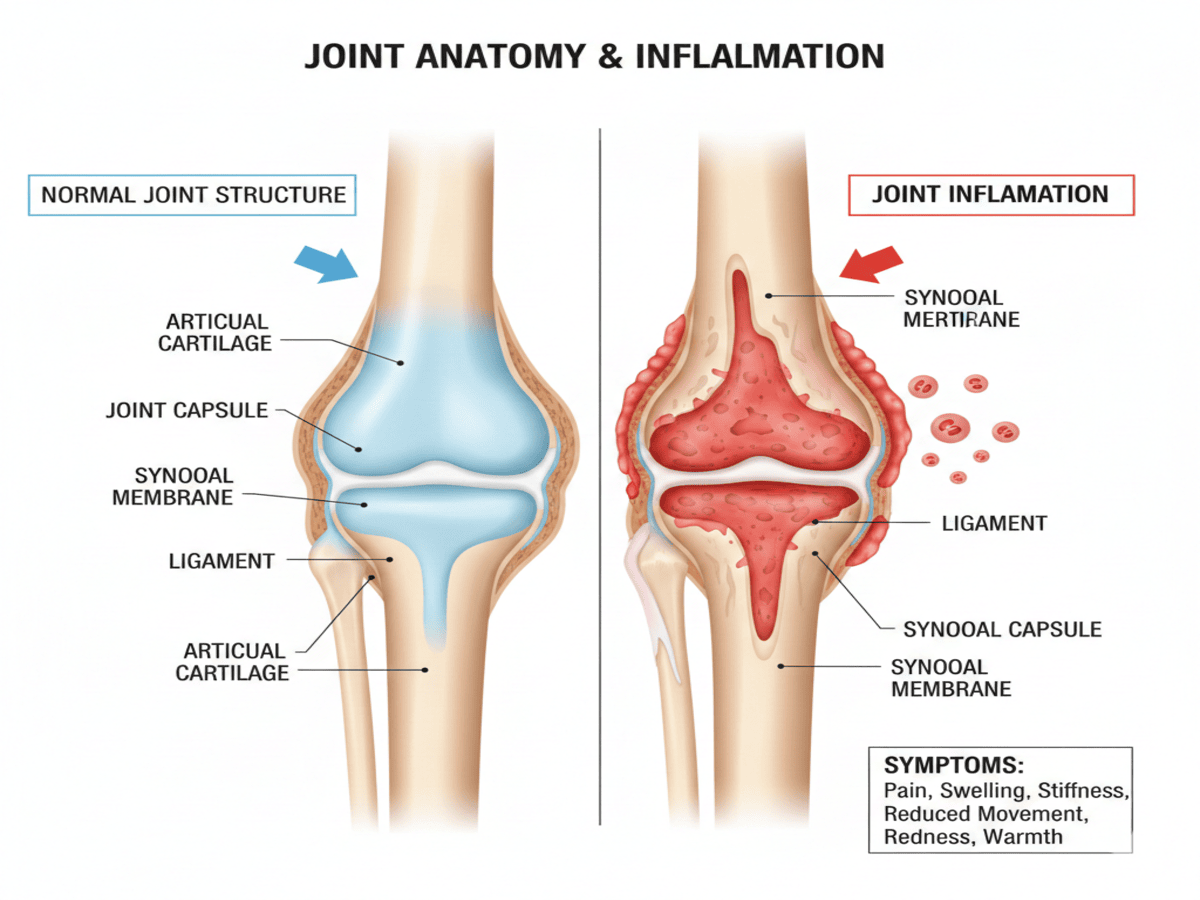 If these feel familiar, your body may be asking for structural support—not just pain masking.
The Science Behind Joint Pain Supplements That Work
Research shows certain compounds consistently support joint health.
For example:
-
The National Institutes of Health (NIH) reports that glucosamine and chondroitin may support cartilage structure in some individuals. National Institutes of Health
-
The Mayo Clinic notes that turmeric (curcumin) shows anti-inflammatory benefits in joint conditions.
-
A review published in PubMed highlights omega-3 fatty acids for inflammation reduction. PubMed
-
The Arthritis Foundation supports weight management, omega-3 intake, and exercise for long-term relief. Arthritis Foundation
Key Findings You Should Know
-
Glucosamine may slow cartilage breakdown in mild-to-moderate cases.
-
Curcumin reduces inflammatory markers linked to joint discomfort.
-
Omega-3s support joint lubrication and reduce stiffness.
-
Collagen peptides may improve joint elasticity over time.
Notice the theme? Structural support and inflammation control.
That combination is where results happen.
Top Natural Ingredients in Joint Pain Supplements That Work
Here’s what consistently appears in formulas that deliver results:
| Ingredient | Primary Benefit | Best For |
|---|---|---|
| Glucosamine Sulfate | Cartilage support | Early joint stiffness |
| Chondroitin | Shock absorption | Knee discomfort |
| Turmeric (Curcumin) | Anti-inflammatory | Swelling & soreness |
| Collagen Peptides | Joint elasticity | 40+ adults |
| Omega-3s | Inflammation reduction | Whole-body joint support |
Combination formulas often outperform single ingredients. Biology is rarely one-dimensional.
Glucosamine: The Structural Supporter
Glucosamine helps maintain cartilage—the cushion between bones.
Some studies suggest consistent use over several weeks may reduce stiffness. It’s especially useful for knee joints.
Best for: early degeneration and mild discomfort.
Turmeric (Curcumin): The Inflammation Regulator
Turmeric doesn’t rebuild cartilage. Instead, it calms inflammatory pathways.
And here’s what surprises most people—inflammation often drives more discomfort than structural damage itself.
Look for formulas with black pepper extract (piperine) to enhance absorption.
Collagen Peptides: The Quiet Rebuilder
Collagen is the protein framework of connective tissue.
After 40, collagen production declines. Supplementing may improve joint flexibility and reduce discomfort over time.
Ever wonder why collagen keeps appearing in top formulas? Because joints are built from it.
Product Comparison: What Actually Works Best
| Feature | Basic Formula | Advanced Blend | ⭐ Best Pick |
|---|---|---|---|
| Multi-Ingredient | ✓ | ✓✓ | ✓✓✓ |
| Includes Collagen | No | Yes | Yes |
| Anti-Inflammatory Support | Moderate | Strong | Strong |
| Ease of Use | Capsules | Capsules | Capsules |
| Best For | Mild issues | Moderate discomfort | 40+ long-term support |
👉 Explore Trusted Joint Support Options →
How to Choose the Right Option for You
If your issue is mild stiffness, a glucosamine-based formula may be enough.
If inflammation and swelling dominate, prioritize turmeric and omega-3 support.
If you’re over 40 and thinking long-term, choose a comprehensive blend that addresses structure and inflammation together.
Budget matters. So does consistency.
A supplement only works if you take it.
Lifestyle Habits That Multiply Results
Supplements help. But habits amplify.
Diet Tips That Complement Joint Support
-
Eat fatty fish (omega-3 source)
-
Increase leafy greens
-
Reduce processed sugar (inflammation trigger)
-
Stay hydrated
 Sleep, Stress, and Movement: The Quiet Multipliers
- Sleep restores tissue repair.
- Stress increases inflammation hormones.
- Gentle movement lubricates joints.
A 20-minute daily walk can be more powerful than you think.
Natural vs. Conventional: An Honest Comparison
| Approach | Benefits | Drawbacks | Best For |
|---|---|---|---|
| Natural Supplements | Sustainable support | Slower results | Mild to moderate discomfort |
| NSAIDs / Medications | Fast pain relief | Side effects risk | Acute pain |
| Combined Approach | Balanced | Needs guidance | Most people |
Both have a place. It’s not either/or—it’s strategy.
When to Talk to a Professional
Seek medical advice if:
-
Pain worsens suddenly
-
Swelling is severe
-
The joint becomes red and hot
-
No improvement after 6 weeks
Persistent joint pain deserves evaluation.
Key Takeaways
✅ The best joint pain supplements that work combine structural and anti-inflammatory support
✅ Glucosamine, collagen, turmeric, and omega-3s lead the research
✅ Lifestyle habits dramatically improve results
✅ Early action works better than waiting
Conclusion
Joint pain doesn’t mean your active years are behind you.
More often, it means your joints need better support—structurally and nutritionally.
Start early. Stay consistent. Combine smart supplementation with movement and recovery.
Your joints carry you through life. Supporting them isn’t optional—it’s strategic.
👉 Explore Trusted Joint Support Options →
FAQs About Joint Pain Supplements That Work
1. How long before joint supplements start working?
Most people notice improvement within 4–8 weeks. Structural support takes time—consistency matters.
2. Are joint supplements safe long-term?
Most natural joint supplements are safe when taken as directed. However, always consult a healthcare provider if you have medical conditions.
3. Can I take joint supplements with medication?
Some ingredients may interact with blood thinners or anti-inflammatory drugs. Speak with your doctor first.
4. What’s the best time of day to take them?
With meals—especially those containing healthy fats for better absorption.
5. How do I know if they’re working?
Look for reduced stiffness, improved flexibility, and easier movement during daily tasks.