Joint Pain Relief at Home: Natural Ways That Actually Help

Why your joints may not be “aging”… they may just be inflamed
Most Joint Pain Isn’t Aging—Here’s What’s Really Happening
Joint pain rarely announces itself loudly.
Instead, it whispers.
A stiff knee when you wake up.
A shoulder that hesitates before lifting.
A back that needs “warming up” before it cooperates.
Many people accept this as normal aging. But here’s the truth most don’t hear:
👉 Aging doesn’t cause joint pain—unmanaged inflammation does.
That distinction changes everything.
In this guide, you’ll discover joint pain relief strategies you can use at home, backed by research and real-world practicality—not hype. Read More…
You’ll learn:
-
What joint pain actually means
-
Natural methods that consistently help
-
How to support your joints without harsh medications
-
A trusted option many adults over 40 are quietly using
What Joint Pain Relief Really Means (Without the Medical Jargon)
Joint pain relief isn’t about masking pain.
It’s about supporting the systems that keep joints moving smoothly, including:
-
Cartilage cushioning
-
Joint lubrication (synovial fluid)
-
Connective tissue strength
-
Inflammation balance
When inflammation rises and lubrication drops, joints stiffen—and pain follows.
The encouraging part?
Those processes are highly responsive to natural support.
Early Warning Signs You Shouldn’t Ignore
Most people experiencing joint discomfort notice:
-
Stiffness after waking or sitting
-
Pain that improves once you move
-
Reduced flexibility
-
Mild swelling or tenderness
These are signals, not sentences.
What Science Says About Joint Pain Relief
Modern research consistently shows that inflammation—not age alone—is the main driver of joint discomfort.
According to the National Institutes of Health, chronic joint pain is strongly linked to inflammatory processes and cartilage stress.
Likewise, the Mayo Clinic emphasizes that lifestyle choices—movement, nutrition, and weight balance—directly influence joint comfort and mobility.
What This Means for You
-
Joint pain is often reversible or manageable
-
Movement nourishes joints instead of harming them
-
Natural compounds can support long-term comfort
Natural Ways to Support Joint Pain Relief at Home
These approaches work best when combined—not used in isolation.
1️⃣ Gentle Daily Movement
Movement stimulates joint lubrication and circulation.
Best options:
-
Walking
-
Light stretching
-
Mobility exercises
Even 15–20 minutes daily makes a difference.
2️⃣ Anti-Inflammatory Nutrition
Food can either fuel joint inflammation or calm it.
Joint-friendly choices include:
-
Fatty fish (omega-3s)
-
Leafy greens
-
Olive oil
-
Turmeric and ginger
The Arthritis Foundation consistently highlights diet as a cornerstone of joint comfort.
3️⃣ Heat & Cold Therapy
Simple but powerful:
-
Heat relaxes stiff joints
-
Cold reduces swelling during flare-ups
Ten minutes. Big payoff.
4️⃣ Targeted Joint Support (Where Most People Miss Out)
Here’s where many people struggle.
Even with good habits, joints still need specific nutrients to maintain cushioning and lubrication—especially after 40.
Key compounds shown to support joint comfort include:
-
Curcumin
-
Omega-3 fatty acids
-
Glucosamine & chondroitin
-
Collagen peptides
👉 Combination formulas tend to work better because joints rely on multiple systems working together.
If you’d like to explore a carefully formulated joint support option many adults are using at home, you can review it here:
(This is an informational resource, not medical advice. Always choose what fits your needs.)
Lifestyle Habits That Multiply Joint Pain Relief
Supplements help—but habits decide outcomes.
Diet That Supports Joint Health
-
Reduce sugar and refined carbs
-
Stay hydrated
-
Eat enough protein
Sleep, Stress & Recovery
Sleep is repair time.
Stress fuels inflammation.
Movement keeps joints nourished.
Neglect one, and progress slows.
Natural vs Conventional Joint Pain Relief—An Honest Look
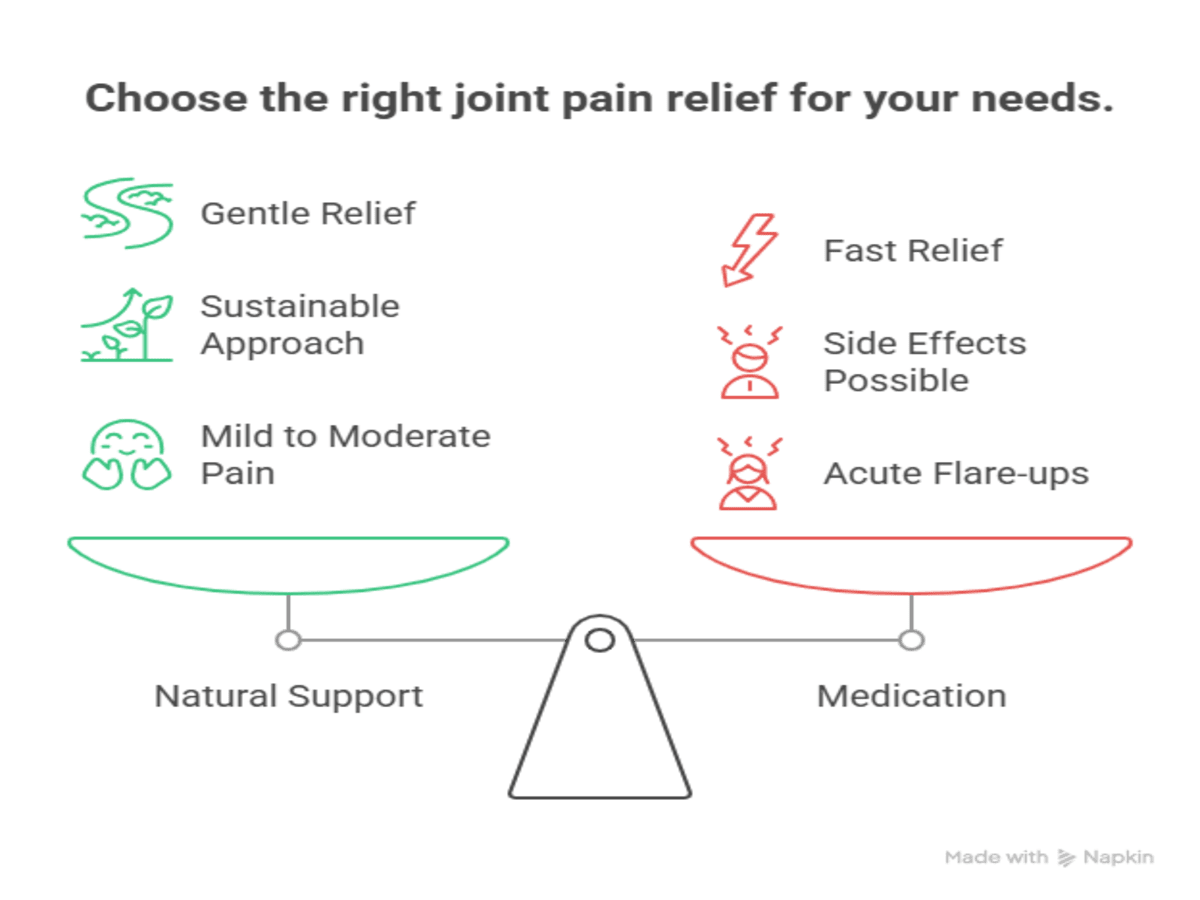 Approach Approach |
Benefits | Drawbacks | Best For |
|---|---|---|---|
There’s no virtue in unnecessary suffering. The best path is the one that works for you.
When to Talk to a Professional
Consult a professional if:
-
Pain worsens suddenly
-
Swelling persists
-
No improvement after 4–6 weeks
That’s not giving up—that’s being smart.
Key Takeaways
✅ Joint pain is often inflammation, not “old age.”
✅ Consistent natural habits support lasting joint pain relief
✅ Movement and nutrition matter as much as supplements
✅ Early action protects long-term mobility
Final Thoughts for otienoamonde.com Readers
Joint discomfort doesn’t mean your best years are behind you.
It means your body is asking for better support—not surrender.
With the right approach, joint pain relief at home becomes realistic, sustainable, and empowering.
👉 If you’re ready to explore gentle, research-backed joint support, you can review this option here:
FAQs About Joint Pain Relief
1. How long does joint pain relief take naturally?
Most people notice improvements within 3–6 weeks of consistency.
2. Can joint pain relief work without medication?
Yes, especially for mild to moderate discomfort.
3. Are supplements enough on their own?
No. They support joints—movement keeps them functional.
4. When is the best time to stretch?
Morning for stiffness, evening for recovery.
5. How do I know it’s working?
Less stiffness, smoother movement, and improved daily comfort.