
How I Evaluate Supplements After 45 (My Personal Framework)
Introduction: Why Supplement Evaluation Changed for Me After 45
If you’d asked me in my 30s how I chose supplements, I probably would’ve shrugged and said, “I read the label and skim a few reviews.” That approach stopped working after 45. Recovery slowed. Sleep became fragile. Joint stiffness lingered longer than it had in the past. That’s when supplement evaluation stopped being casual and became intentional.
After midlife, your body doesn’t respond the same way. Nutrient absorption changes, inflammation creeps in quietly, and marketing noise gets louder just when you need clarity. I realized that blindly trusting buzzwords like ‘clinically proven’ or ‘doctor-recommended’ was no longer good enough.
This post walks you through my personal framework for supplement evaluation after 45—how I filter hype from evidence, what I look for on labels, and why fewer supplements (chosen well) beat a crowded cabinet every time. If you’ve ever stood in the supplement aisle, overwhelmed, this is for you.
Why Supplement Evaluation Matters More After 45
How Aging Changes Nutrient Needs and Absorption

One of the biggest shifts after 45 is how efficiently—or inefficiently—your body absorbs nutrients. Stomach acid often declines with age, making minerals like magnesium, calcium, and zinc harder to absorb. Vitamin D synthesis drops, even if you’re outdoors regularly.
This is where supplement evaluation becomes critical. A supplement that worked at 35 may be ineffective—or unnecessary—at 50. According to research summarized by the National Institutes of Health, age-related changes can significantly affect nutrient metabolism.
In practical terms, this means:
-
You may need different forms of nutrients (e.g., magnesium glycinate instead of oxide).
-
Dosages matter more than brand popularity.
-
Timing and combinations (like vitamin D with fat) impact effectiveness.
I no longer ask, “Is this supplement popular?” I ask, “Is this the right form for my body now?”
My Supplement Evaluation Framework: The Big Picture
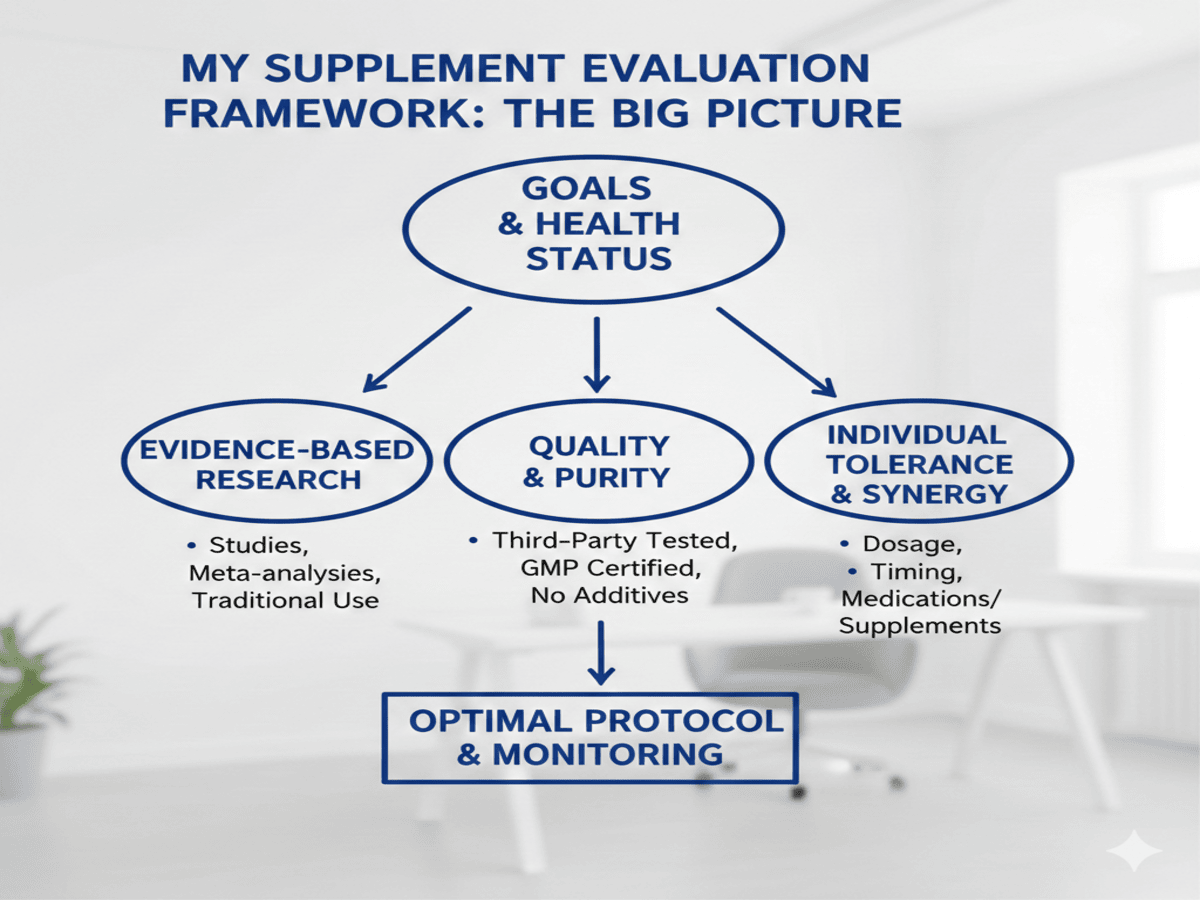
Over the years, I’ve refined my supplement evaluation into four simple but strict filters. If a product fails even one, it doesn’t make it into my routine.
-
Relevance – Does my body actually need this?
-
Evidence – Is there credible research behind it?
-
Quality – Are sourcing and manufacturing transparent?
-
Tolerability – How does my body respond over time?
This framework saves money, reduces pill fatigue, and—most importantly—prevents disappointment. Supplements aren’t magic; they’re tools. And like any tool, the wrong one just gets in the way.
Step 1: Personal Relevance in Supplement Evaluation
Why Blood Work Beats Guesswork
The first question I ask during supplement evaluation is brutally simple: Why am I taking this?
At this stage of life, vague goals like “more energy” aren’t enough. I rely on:
-
Annual blood work
-
Symptom patterns (sleep quality, joint stiffness, digestion)
-
Lifestyle factors (stress, training load, diet consistency)
For example, I stopped taking iron years ago once blood tests showed healthy levels. Continuing “just in case” would’ve done more harm than good. This approach aligns with recommendations from Harvard Health, which emphasizes targeted supplementation over blanket use.
Key takeaway: If you can’t clearly explain why you’re taking a supplement, it doesn’t belong in your routine.
Step 2: Evidence-Based Supplement Evaluation (Not Influencer-Based)
How I Interpret Research Without a PhD
I’m not a scientist, but I’ve learned how to spot solid evidence. During supplement evaluation, I look for:
-
Human studies (not just animal or test-tube research)
-
Realistic dosages (not mega-doses used only in labs)
-
Consistent results across multiple studies
I often start with databases like PubMed to see whether a supplement has been studied in adults over 40. If benefits only appear in young athletes or rodents, I proceed with caution.
I also pay attention to what the research doesn’t say. If studies show modest benefits, I expect modest results—not miracles.
Step 3: Ingredient Quality and Label Transparency
What I Look for During Supplement Evaluation
Labels can be deceptive. “Natural” doesn’t mean effective, and “proprietary blend” usually means underdosed. My supplement evaluation checklist includes:
-
Exact dosages (no blends hiding amounts)
-
Bioavailable forms (e.g., methylated B vitamins)
-
Third-party testing (USP, NSF, or similar)
-
Minimal fillers and unnecessary additives
Here’s a quick comparison table I use mentally:
| High-Quality Supplement | Low-Quality Supplement |
|---|---|
| Transparent dosing | Proprietary blends |
| Third-party tested | No verification |
| Clinically relevant doses | Pixie-dust amounts |
| Clear sourcing info | Vague marketing claims |
If a brand isn’t willing to show what’s inside, I’m not willing to swallow it.
Step 4: Safety and Interactions After 45
Why Supplement Evaluation Includes What You Don’t Take
After 45, medications enter the picture more often—blood pressure meds, statins, or sleep aids. Supplement evaluation must include interaction risk.
For instance:
-
Magnesium can enhance certain medications.
-
St. John’s Wort interacts with antidepressants.
-
High-dose vitamin K can interfere with blood thinners.
I cross-check supplements with reliable interaction tools and, when needed, discuss them with a healthcare provider. This step alone has prevented more than one bad decision.
Step 5: Listening to Biofeedback Over Time
How My Body Finalizes Supplement Evaluation
The last—and most underrated—part of supplement evaluation is feedback. I introduce one supplement at a time and observe:
-
Energy levels
-
Sleep quality
-
Digestive comfort
-
Joint or muscle response
If I feel worse, foggy, or overstimulated, I stop. No justification required.
I’ve learned that more isn’t better. Sometimes the best supplement decision is subtraction.
Common Supplement Categories I Re-Evaluated After 45
What Stayed, What Changed, What Left
Here’s a simplified view of how my supplement evaluation evolved:
-
Stayed: Vitamin D (with testing), magnesium, omega-3s
-
Changed: Switched to better forms and adjusted dosages
-
Removed: Multivitamins with unnecessary overlaps
This wasn’t about minimalism—it was about precision.
Visual Guide: My Supplement Evaluation Flow
📸 Suggested infographic:
“My 5-Step Supplement Evaluation Framework After 45”
-
Identify need
-
Review evidence
-
Check quality
-
Assess safety
-
Monitor results
(Visuals like this help readers apply the framework quickly.)
Key Insights from My Supplement Evaluation Journey
What I Wish I’d Known Earlier
-
Supplements amplify good habits; they don’t replace them.
-
Consistency matters more than novelty.
-
Your needs at 50 won’t match your needs at 40—and that’s normal.
The biggest mindset shift was realizing that supplement evaluation is ongoing, not a one-time decision.
Conclusion: A Smarter Way to Think About Supplement Evaluation
After 45, supplement evaluation becomes less about chasing optimization and more about supporting resilience. My framework isn’t about perfection—it’s about clarity, safety, and intentionality.
If there’s one thing I hope you take away, it’s this: your body is giving you feedback every day. Supplements should work with that feedback, not override it.
Have you changed how you approach supplement evaluation after 45? Share your experience in the comments, or explore related guides on nutrition, recovery, and healthy aging to deepen your understanding.
Disclaimer: This article reflects personal experience and research, not medical advice. Always consult a qualified professional before making health decisions.