
Collagen vs Glucosamine After 50: Which Is Better for Joints?
If you’re over 50, you’ve probably noticed it already—knees that creak when you stand up, hips that feel stiff in the morning, or shoulders that complain after a simple chore. Joint discomfort has a way of creeping in quietly, then demanding attention.
That’s often when the supplement aisle becomes tempting. Two names dominate the conversation: collagen vs glucosamine. Both are widely recommended for joint health, yet they work in very different ways. So which one truly makes sense after 50?
In this article, we’ll explore the science, practical differences, and real-world considerations of collagen versus glucosamine, helping you make a more informed, personalized choice for your joints.
Why Joint Health Changes After 50 (And Why Supplements Matter)
By the time we reach our 50s, several biological shifts affect joint health:
-
Natural collagen production declines by about 1–1.5% per year
-
Cartilage becomes thinner and less resilient
-
Inflammation increases due to “inflammaging.”
-
Past injuries start to show up again
While exercise, weight management, and nutrition remain foundational, targeted supplementation can help slow joint degeneration and improve comfort. That’s where the debate around collagen vs glucosamine begins.
What Is Collagen? (And How It Supports Joints After 50)
Collagen vs Glucosamine: Understanding Collagen’s Role
Collagen is the most abundant protein in the body. It acts as the structural framework for:
-
Cartilage
-
Tendons and ligaments
-
Bones
-
Skin and connective tissue
After 50, reduced collagen production means joints lose cushioning and elasticity.
How Collagen Helps Aging Joints
When comparing collagen vs glucosamine, collagen works by rebuilding structure, not just relieving symptoms.
Research published in Current Medical Research and Opinion shows that collagen supplementation may help improve joint pain and mobility, especially in older adults and active individuals (study overview).
Potential benefits include:
-
Improved cartilage integrity
-
Reduced joint stiffness
-
Better shock absorption
-
Added benefits for skin, nails, and bones
👉 Hydrolyzed collagen peptides are the most absorbable form.
What Is Glucosamine? (And How It Supports Joints After 50)
Collagen vs Glucosamine: Understanding Glucosamine’s Role
Glucosamine is a natural compound found in cartilage. Unlike collagen, glucosamine focuses on joint lubrication and inflammation control.
It’s commonly used for osteoarthritis and is often paired with chondroitin.
How Glucosamine Works
When evaluating collagen vs glucosamine, glucosamine acts more like a maintenance and pain-management tool.
According to the Arthritis Foundation, glucosamine may help reduce joint pain and slow cartilage breakdown in some individuals (Arthritis Foundation resource).
Potential benefits include:
-
Reduced joint pain
-
Improved joint lubrication
-
Slower cartilage degeneration
-
Relief for mild to moderate osteoarthritis
Results tend to be gradual, often noticeable after 6–8 weeks.
Collagen vs Glucosamine: Side-by-Side Comparison After 50
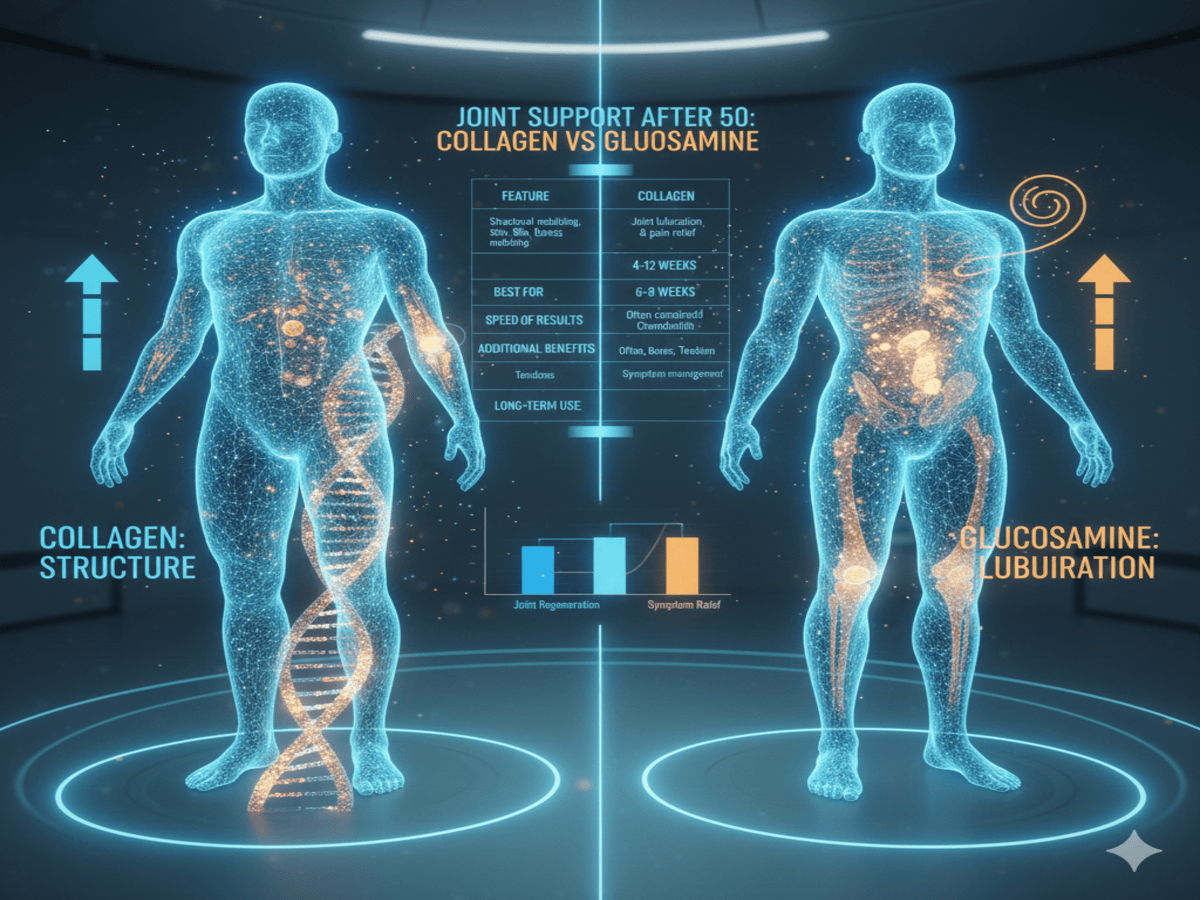
| Feature | Collagen | Glucosamine |
|---|---|---|
| Primary role | Structural rebuilding | Joint lubrication & pain relief |
| Best for | Aging joints, stiffness, and mobility | Osteoarthritis, joint pain |
| Speed of results | 4–12 weeks | 6–8 weeks |
| Additional benefits | Skin, bones, tendons | Often combined with chondroitin |
| Long-term use | Supports joint regeneration | Supports symptom management |
Key Insight: Collagen vs Glucosamine Is Not an Either-Or Decision
One of the biggest misconceptions in the collagen vs glucosamine debate is assuming you must choose only one.
In reality, they address different aspects of joint aging.
-
Collagen helps rebuild and strengthen joint structures.
-
Glucosamine helps protect and lubricate existing cartilage.
For many adults over 50, using both strategically delivers better outcomes than relying on one alone.
My Personal Perspective After 50
As someone who has lived an active life and crossed the 50-year mark, I’ve learned that joint health is not about quick fixes—it’s about long-term resilience.
What stood out for me was how collagen improved stiffness and overall joint “feel,” especially in the mornings, while glucosamine made movement more comfortable during physically demanding days.
This reinforced an important lesson: structural support and symptom relief work best together.
How to Choose Between Collagen vs Glucosamine After 50
Choose Collagen If You:
-
Feel stiff rather than inflamed
-
Want long-term joint, bone, and tendon support
-
Are noticing overall aging effects (skin, joints, recovery)
-
Are physically active or rebuilding strength
Choose Glucosamine If You:
-
Have diagnosed osteoarthritis
-
Experience joint pain with movement
-
Need symptom relief during daily activities
-
Have cartilage wear confirmed by a doctor
Consider Both If You:
-
Want comprehensive joint support
-
Are you managing age-related wear and tear
-
Prefer prevention plus relief
For a deeper look at holistic joint support strategies, you may also find this helpful:
👉 Read More…
Safety, Dosage & Practical Tips
Collagen
-
Typical dose: 10–15g daily
-
Best taken with vitamin C
-
Safe for long-term use
Glucosamine
-
Typical dose: 1,500mg daily
-
May take several weeks to notice effects
-
Avoid if allergic to shellfish (unless plant-based)
Always consult a healthcare professional, especially if you’re managing chronic conditions or medications.
Final Verdict: Collagen vs Glucosamine After 50
So, which is better—collagen vs glucosamine?
The honest answer: it depends on your joints’ story.
-
If your joints feel weak, stiff, or “aged,” collagen offers foundational support.
-
If pain and cartilage wear are your main concern, glucosamine may provide relief.
-
If longevity and mobility matter most, combining both—wisely—can be the most effective strategy.
Joint health after 50 isn’t about chasing youth; it’s about preserving movement, independence, and quality of life.
Call to Action
💬 Have you tried collagen or glucosamine?
Share your experience in the comments—your story may help someone else make a better decision.
📩 Subscribe for more evidence-based insights on healthy aging, supplements, and vitality after 45.
🔗 Explore related reads:
-
Supplements for Energy and Vitality After 45
-
How I Evaluate Supplements After 50
Your joints carry you through life—give them the support they deserve.